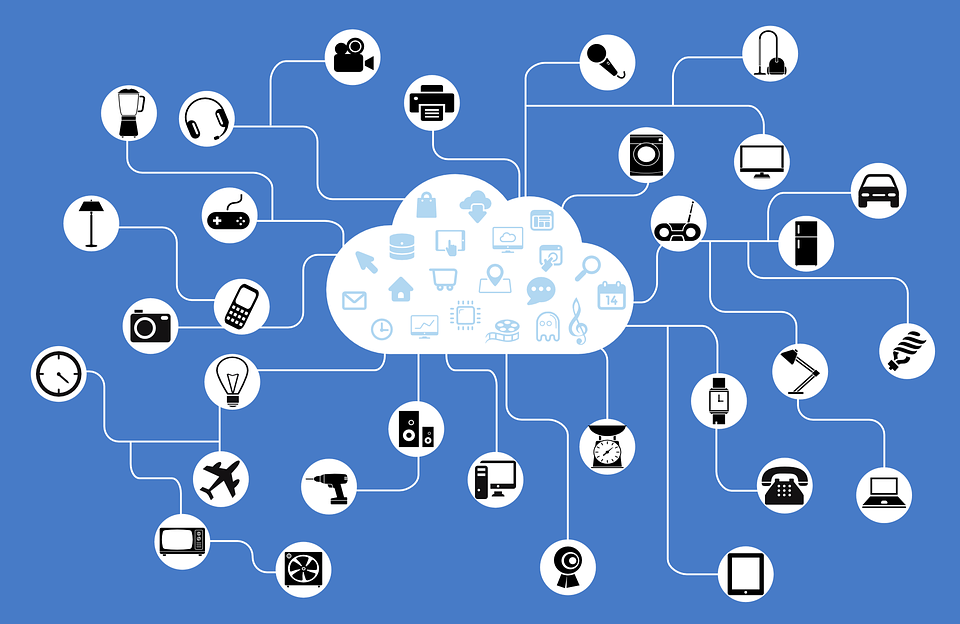
The retail industry stands at the precipice of a technological revolution. As enterprise IoT deployments mature beyond simple sensor networks, forward-thinking retailers are discovering that the convergence of artificial intelligence and microservices architecture is unlocking unprecedented operational insights and efficiencies. This transformation is reshaping how retail industrial systems operate, from warehouse automation to supply chain optimization.
The Evolution Beyond Traditional IoT Architectures
Traditional IoT implementations in retail often relied on monolithic systems that struggled to scale with the explosive growth of connected devices. Picture a major retailer managing thousands of sensors across inventory tracking, environmental monitoring, security systems, and customer analytics platforms. The old approach would funnel all this data through centralized processing systems, creating bottlenecks and single points of failure.
Enter AI-driven microservices – a paradigm shift that breaks complex IoT operations into smaller, specialized services, each enhanced with intelligent capabilities. Instead of one massive system trying to handle everything, retailers now deploy networks of focused, AI-powered services that can independently process, analyze, and respond to specific types of IoT data.
Real-World Applications Driving Results
Consider how a leading grocery chain transformed its cold storage operations. Previously, temperature monitoring relied on basic threshold alerts that often-triggered false alarms or missed subtle patterns indicating equipment degradation. By implementing AI-driven microservices, they created specialized services for predictive maintenance, energy optimization, and quality assurance.
The predictive maintenance microservice analyzes vibration data, temperature fluctuations, and power consumption patterns from refrigeration units. Machine learning algorithms identify subtle anomalies that precede equipment failures, often weeks before traditional monitoring would detect issues. Meanwhile, a separate energy optimization service dynamically adjusts cooling cycles based on foot traffic patterns, weather forecasts, and inventory levels.
This modular approach delivered remarkable results: 35% reduction in equipment downtime, 22% decrease in energy consumption, and virtually eliminated product spoilage from temperature excursions.
The Architecture Advantage
What makes AI-driven microservices so powerful for retail IoT? The answer lies in their fundamental design principles. Each microservice operates independently, processing specific data streams and making autonomous decisions within its domain. This creates several compelling advantages:
Scalability that matches business growth becomes possible when new store locations or device types can be supported by simply deploying additional microservice instances. There's no need to overhaul entire systems or worry about capacity constraints affecting unrelated operations.Resilience through isolation ensures that if one service experiences issues – perhaps the customer analytics microservice encounters a bug – the inventory management and security systems continue operating normally. This compartmentalization is crucial for retail environments where system availability directly impacts revenue.Rapid innovation cycles emerge when development teams can update individual services without coordinating massive system-wide deployments. A retailer might enhance their demand forecasting algorithms or add new payment processing capabilities without touching their existing inventory or security services.
Intelligent Edge Processing Revolution
The integration of AI capabilities directly within microservices is particularly transformative at the edge of retail networks. Smart cameras in stores no longer just capture video; they run computer vision microservices that analyze customer behavior, detect shoplifting attempts, and optimize product placement in real-time.
These edge-deployed AI microservices process data locally, reducing bandwidth requirements and enabling split-second responses. A theft detection service can immediately alert security personnel, while a customer flow analysis service adjusts digital signage and lighting to guide shoppers toward high-margin products.
The distributed intelligence model also addresses privacy concerns by processing sensitive customer data locally rather than transmitting it to central servers. This approach helps retailers comply with data protection regulations while still extracting valuable business insights.
Supply Chain Orchestration Through Intelligent Services
Perhaps nowhere is the impact more dramatic than in supply chain management, where AI-driven microservices are creating unprecedented visibility and control. Modern retailers deploy specialized services for demand forecasting, supplier performance monitoring, logistics optimization, and quality assurance – each leveraging AI to process vast streams of IoT data.
The demand forecasting service might analyze point-of-sale data, weather patterns, social media trends, and local events to predict product demand with remarkable accuracy. Simultaneously, a logistics optimization service processes GPS data from delivery vehicles, traffic conditions, and warehouse capacity to dynamically route shipments and minimize delivery times.
These services communicate through well-defined APIs, creating an orchestrated ecosystem where insights from one service inform decisions in others. When the demand forecasting service predicts increased demand for seasonal items, it automatically triggers the logistics service to adjust inventory distribution and alerts the supplier management service to negotiate expedited deliveries.
Overcoming Implementation Challenges
The transition to AI-driven microservices isn't without challenges. Many retailers struggle with the complexity of managing numerous interconnected services, each with its own deployment, monitoring, and scaling requirements. The key lies in adopting container orchestration platforms and comprehensive observability tools that provide unified visibility across the entire microservices ecosystem.
Data consistency presents another hurdle when multiple services need access to shared information. Successful implementations establish clear data ownership patterns and implement event-driven architectures that keep services synchronized without tight coupling.
Security also requires fresh thinking when attack surfaces multiply across dozens of microservices. Zero-trust networking principles and service mesh architectures help maintain security boundaries while enabling necessary communication between services.
The Future of Retail IoT Infrastructure
Looking ahead, the convergence of AI and microservices in retail IoT is accelerating toward even more sophisticated applications. We're beginning to see autonomous retail operations where AI services collaboratively manage entire aspects of store operations, from automated inventory replenishment to dynamic pricing optimization based on real-time demand signals.
The emergence of federated learning is enabling AI microservices across different store locations to collaboratively improve their algorithms while maintaining data privacy. A customer behavior analysis service at one location can benefit from insights learned at other stores without sharing sensitive customer data.
Edge AI capabilities are also advancing rapidly, allowing more sophisticated microservices to operate directly on IoT devices. Smart shelves might soon run inventory optimization services locally, while intelligent shopping carts provide personalized recommendations through embedded AI services.
Strategic Recommendations for Retail Leaders
For retail organizations considering this transformation, success requires a thoughtful approach that balances ambition with practical implementation realities. Start with high-impact use cases where the benefits of AI-driven microservices clearly outweigh the architectural complexity. These are typically areas involving predictive maintenance, demand forecasting, or customer analytics.
Invest heavily in the foundational infrastructure that makes microservices manageable at scale. Container orchestration, service discovery, and comprehensive monitoring are not optional components; they're essential for preventing the distributed complexity from overwhelming your operations teams.
Most importantly, foster a culture of experimentation and learning. The most successful implementations treat AI-driven microservices as an evolving capability rather than a fixed solution. Teams that continuously experiment, measure results, and refine their approaches consistently achieve superior outcomes.
Conclusion
The transformation of retail IoT infrastructure through AI-driven microservices represents more than a technological upgrade – it's a fundamental reimagining of how intelligent systems can orchestrate complex retail operations. As these architectures mature, retailers who embrace this convergence will find themselves with unprecedented agility to adapt to market changes, optimize operations, and deliver exceptional customer experiences.
The question isn't whether AI-driven microservices will become standard in retail IoT, but how quickly forward-thinking retailers can harness their potential to gain competitive advantage. Those who act decisively today will shape the future of retail operations tomorrow.
About the author: Udaya Veeramreddygari is an experienced software engineering leader with over two decades of proven expertise in architecting, developing, and managing enterprise-scale applications across automotive, retail, finance, and telecommunications domains. Specialized in implementing scalable, cloud-native systems using modern frameworks and architectural patterns, AWS, and GenAI technologies, leading global cross-functional teams to deliver high-performance, secure, cloud-native solutions aligned with business strategy. In his current role as Lead Software Engineer at Cox Automotive, he drives legacy system modernization, ML/AI integration, and generative AI enablement—boosting productivity, fostering automation, and orchestrating agent-driven workflows across the SDLC. Certified professional in AWS, Anthropic, Scrum, ITIL, and architecture
Beyond engineering, actively engaged with the technology community through global conference speaking, technical program committee memberships (ICoSEIT, BDAA), and peer reviews of conference papers, and serving as a judge for Globee® Awards and Business Intelligence Group. An active IEEE member in producing research papers, also contributes scholarly articles on Data, Microservices, Event Driven architecture, LLMs, GenAI, AI productivity, and sustainability across platforms like DZone, Dev.to, Medium, and Dataversity. Udaya brings a rare combination of deep technical expertise, leadership acumen, and thought leadership, enabling teams and organizations to navigate modern engineering challenges with clarity and innovation.
Edited by
Erik Linask